-
Step One Of ‘What To Listen To’ In Suicide Prevention
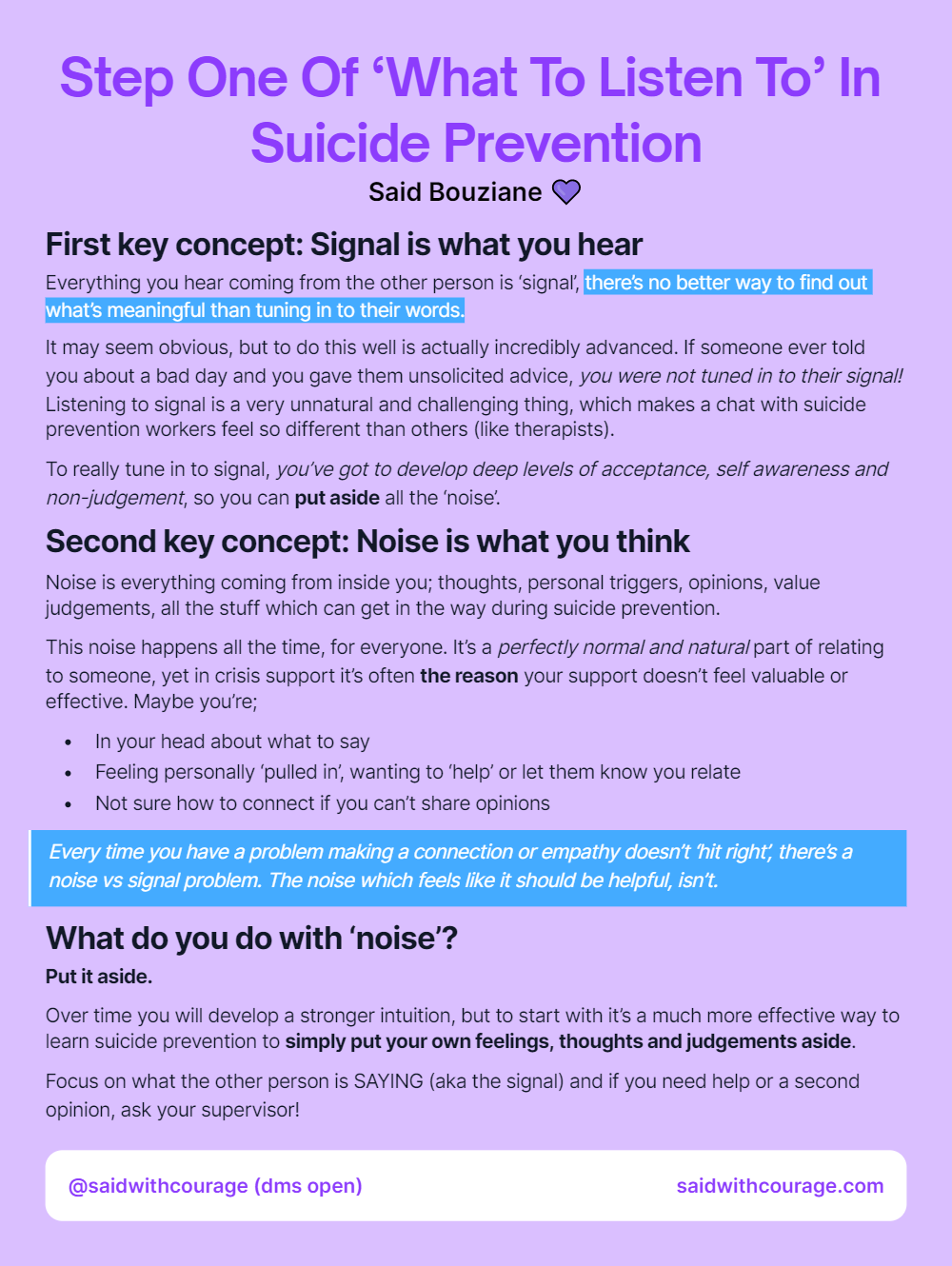
First key concept: Signal is what you hear Everything you hear coming from the other person is ‘signal’, there’s no better way to find out what’s meaningful than tuning in to their words. It may seem obvious, but to do this well is actually incredibly advanced. If someone ever told you about a bad day…
-
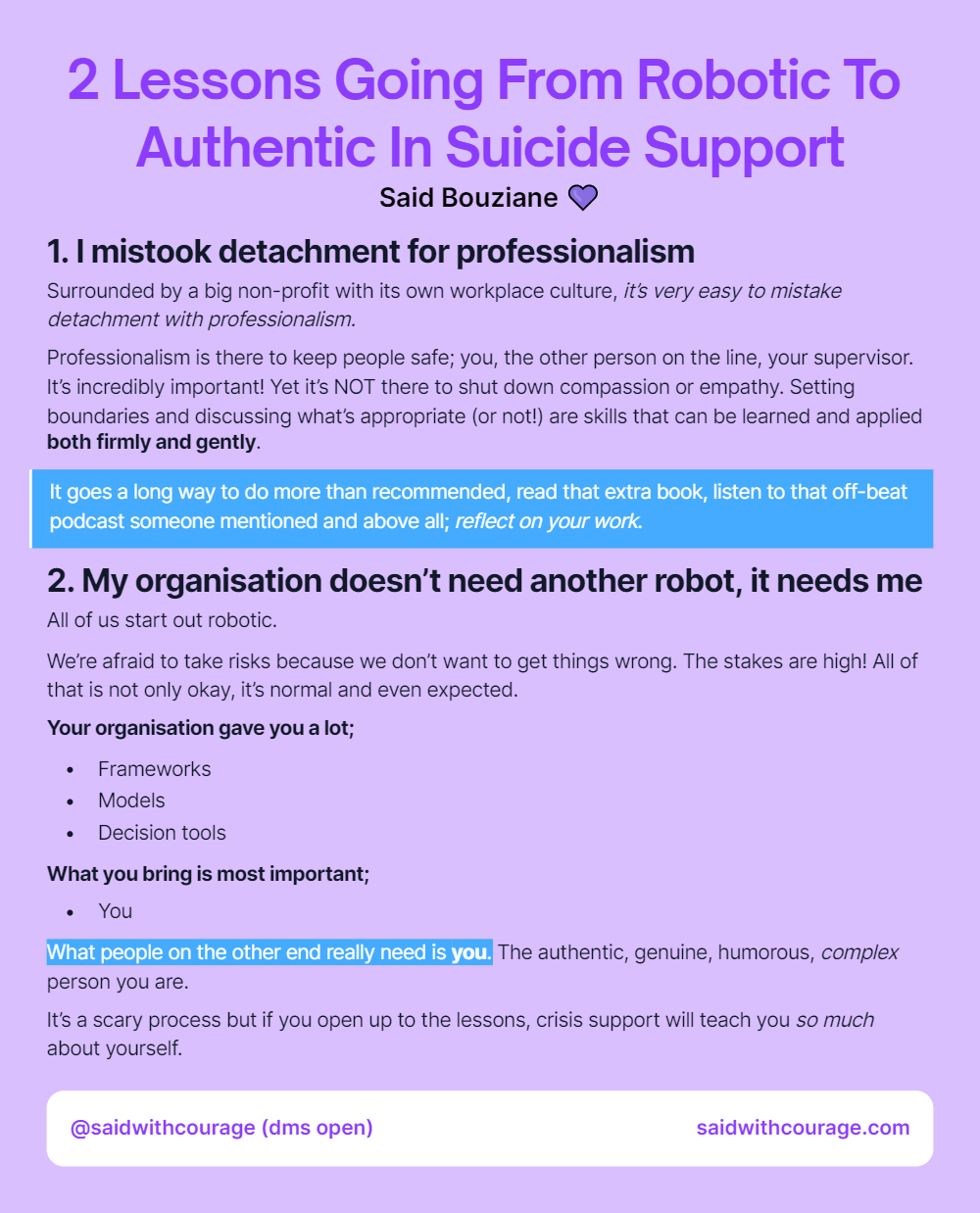
2 Lessons Going From Robotic To Authentic In Suicide Support

1. I mistook detachment for professionalism Surrounded by a big non-profit with its own workplace culture, it’s very easy to mistake detachment with professionalism. Professionalism is there to keep people safe; you, the other person on the line, your supervisor. It’s incredibly important! Yet it’s NOT there to shut down compassion or empathy. Setting boundaries…
-
How To Validate Without Taking Sides
When navigating the often uncomfortable journey to non-judgement, there can be a lot to balance. Between staying within the framework, balancing professionalism with authenticity and learning to gain, spend and repair trust… it’s a lot! On my journey into mental health support work and non-judgemental listening, I always found it helpful to simplify as much…
-
Edit Less, Impact More with Sentence Stem Workshopping
Why to Practice Workshopping Sentences When you’re in the hotseat and providing support to someone in crisis, you don’t have time to edit. You’ve got their words waiting for you on the screen, or their voice waiting for you over the phone. You don’t have the luxury of crafting a perfect reply if they’re waiting!…
-
Afraid To Interrupt During Crisis Support?
When starting out supporting people in mental health, students often get caught in cyclic minimal encouragers. This is particularly easy the more the help seeker talks. As you can imagine… This can become problematic. Multiply passive crisis support listening skills by non-stop help seeker rambling skills and you have the formula for… a very ineffective…
-
Sentence Stems for Asking About Suicide
-
Contextualising the 5 Senses Grounding Technique
-
Attending to both Feelings and Safety
Often when learning something it’s easy to rulify things. This helps to simplify the complex. When used in the right way, simple rules for practice can make a huge difference in developing our skillset and comfort level engaging compassionately with self awareness. When used poorly, over simplification of rules or guidelines can really hurt connection.…
-
Are We Aligned?
We all slip out of alignment with the framework sometimes. Perhaps we get caught up in a story. Maybe we offer some advice, moving away from collaboration toward direction. Could be we don’t feel comfortable to sit with a help seeker saying brutally critical things about themselves, so we accidentally deny their feelings in an…
-
Balance Appropriate With Authentic By Swimming Between the Flags